

Pricing is one of the fastest ways to lose or win a sale — often within seconds.
The moment a visitor sees your product price, their brain runs a silent evaluation:
Is this worth it? Is it expensive? Can I trust this brand?
That decision is emotional, not logical — and it determines whether the user continues or leaves.
Many eCommerce brands invest heavily in ads, traffic, and design, yet struggle with conversions because pricing is treated as a simple number instead of a strategic decision. A great product with poor pricing will underperform. A well-priced product, even in a competitive market, can outperform stronger brands.
This is where price optimization becomes one of the most powerful conversion levers in eCommerce.
What Is Price Optimization in eCommerce?
Price optimization in eCommerce means finding the right price for a product — a price customers are happy to pay and your business can profit from.
It is about discovering the sweet spot between customer demand and business profitability.
Price optimization does not mean keeping prices low or competing only on discounts.
Instead, it focuses on pricing that feels fair, valuable, and justified to the customer.
Online shoppers decide very quickly. They compare your price with competitors, judge the value they are getting, and decide whether the price feels worth it.
If the price feels too high, they leave
If the price feels too low, they doubt quality
Price optimization helps avoid both situations.
How Price Optimization Actually Works
Price optimization relies on real data instead of guesswork.
Price optimization relies on real data instead of guesswork.
It studies customer behavior, market conditions, and how pricing affects buying decisions. The goal is not to guess what might work, but to understand what actually works.
Let’s break down the key elements.
Customer Demand
Customer demand shows how much your audience is willing to pay.
Some customers look for the lowest price. Others are willing to pay more for quality, convenience, or brand trust. You cannot assume which group dominates — you need data.
By analyzing browsing behavior, past purchases, and conversion patterns, you learn:
What price feels acceptable
Where customers hesitate
When price becomes a deal-breaker
This understanding forms the foundation of smart pricing.
Business Profitability
Pricing must support your business goals — not just conversions.
A good price:
Covers production and operational costs
Maintains healthy profit margins
Aligns with long-term growth plans
Price optimization balances customer value and business sustainability, instead of chasing short-term sales through heavy discounts.
Customer Data Analytics
Customer data tells the real story behind pricing performance.
By analyzing:
Past sales data
Customer demographics
Purchase frequency
Feedback and surveys
You gain insights into what customers expect from your pricing.
This allows you to adjust prices based on real behavior, not assumptions.
Market & Competitor Analysis
Your market constantly changes.
Competitors adjust prices, launch offers, and reposition products. Price optimization helps you stay competitive without blindly copying others.
The goal is to understand:
Where your price stands in the market
How much value you offer compared to alternatives
Where you can price smarter or higher
This avoids unnecessary price wars and helps position your product correctly.
Machine Learning & Smart Algorithms
Modern eCommerce brands increasingly rely on technology to make smarter pricing decisions.
Machine learning tools analyze large datasets including:
Customer behavior
Market trends
Competitor pricing
Demand fluctuations
These tools identify price points most likely to convert — faster and more accurately than manual analysis.
Technology handles complexity so businesses can focus on growth.
Continuous Price Adjustment
Price optimization is not a one-time task.
Customer preferences change.
Market conditions shift.
Demand rises and falls.
That’s why pricing requires continuous review through:
Adjusting prices up or down
Testing different price points
Running controlled discounts
Using dynamic pricing strategies
Regular optimization keeps your pricing relevant and competitive.
Why Are Most Companies So Bad at Pricing?
Most businesses don’t fail because of bad products. They fail because they don’t understand how pricing works in the user’s mind.
Here’s why.
Pricing Is Set Internally, Not From the User’s perspective.
Many businesses price products like this:
Cost + margin = selling price
But customers never see your cost.
They only ask one question:
“Is this worth my money?”
Ignoring user perception creates resistance and hesitation.
Pricing Psychology Is Ignored
Small pricing changes can create big shifts in buying behavior.
For example:
₹1000 feels like a major expense
₹999 feels psychologically smaller
Most businesses ignore these psychological cues and lose conversions without realizing it.
Competitors Are Copied Blindly
Some brands simply match competitor prices — without understanding context.
Competitors may have:
Stronger brand trust
Higher volume margins
A different audience
Copying prices without strategy often leads to poor results.
No Testing or Learning
Pricing is often treated as “set and forget”.
Many businesses never:
Test alternative price points
Study cart abandonment due to pricing
Measure price impact on conversions
Without testing, pricing decisions remain weak.
How Users Actually Judge Prices on Your Website
Users don’t evaluate pricing logically.
They judge prices emotionally and instantly.
When a user sees your price, their mind checks:
Does this feel expensive?
Have I seen this cheaper elsewhere?
Is shipping included?
Can I trust this brand?
This judgment happens in seconds.
If pricing creates doubt, users exit — even if the product is good.
Pricing Strategy to Boost Conversion Rate
Now let’s fix the problem systematically.
Step 1: Identify Where Price Blocks Users

This analysis is based on real user data from Google Analytics combined with behavioral heatmap insights.
It clearly shows where users drop off and hesitate due to pricing on the product and checkout Pages.
These findings are driven by actual user behavior , not assumptions or estimates. As a result, the insights are reliable, data-backed, and actionable for improving conversions.
Start by analyzing:
- Product page exit rate
- Add-to-cart vs checkout completion
- Competitor pricing range
This shows where users hesitate because of price.
Step 2: Apply Psychological Pricing
Use price endings that reduce mental friction.
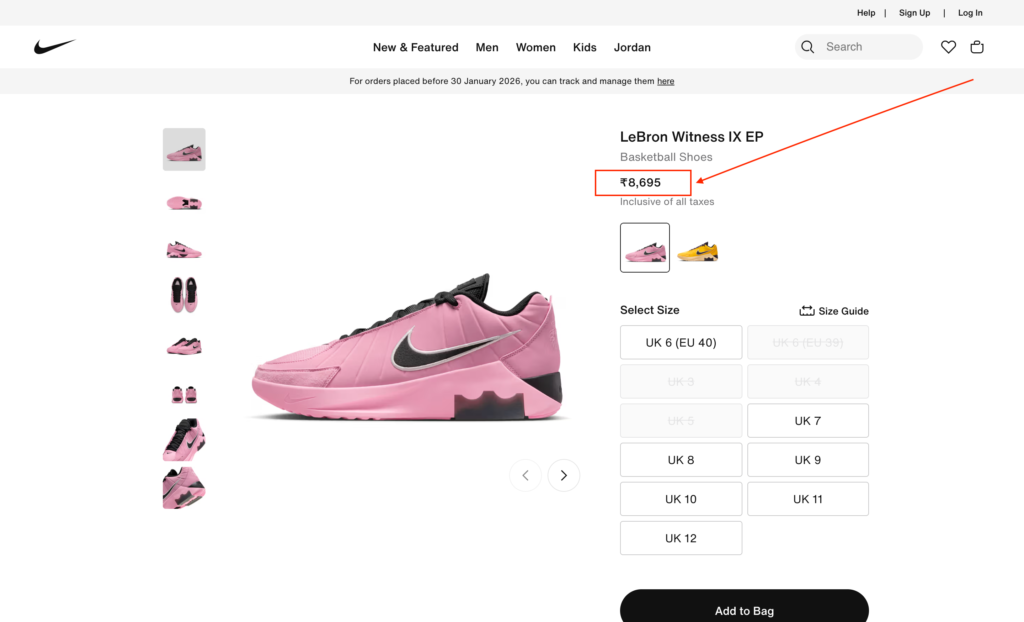
Nike is a global brand that doesn’t rely on heavy discounts or aggressive marketing.
Instead, it uses psychological pricing (like ₹8,695 instead of ₹9,000) to reduce mental resistance and feel more affordable.
This clean pricing builds instant trust, comfort, and premium perception, encouraging repeat purchases.
Using similar price endings on your store can subtly attract users and improve conversions without hurting brand value.
Examples:
- ₹1000 → ₹999
- ₹2000 → ₹1999
- ₹9000 → ₹8695
This works because users focus on the first digit, not the full number.
Step 3: Use Anchor Pricing to Create Value
Show a higher reference price first, then the selling price.
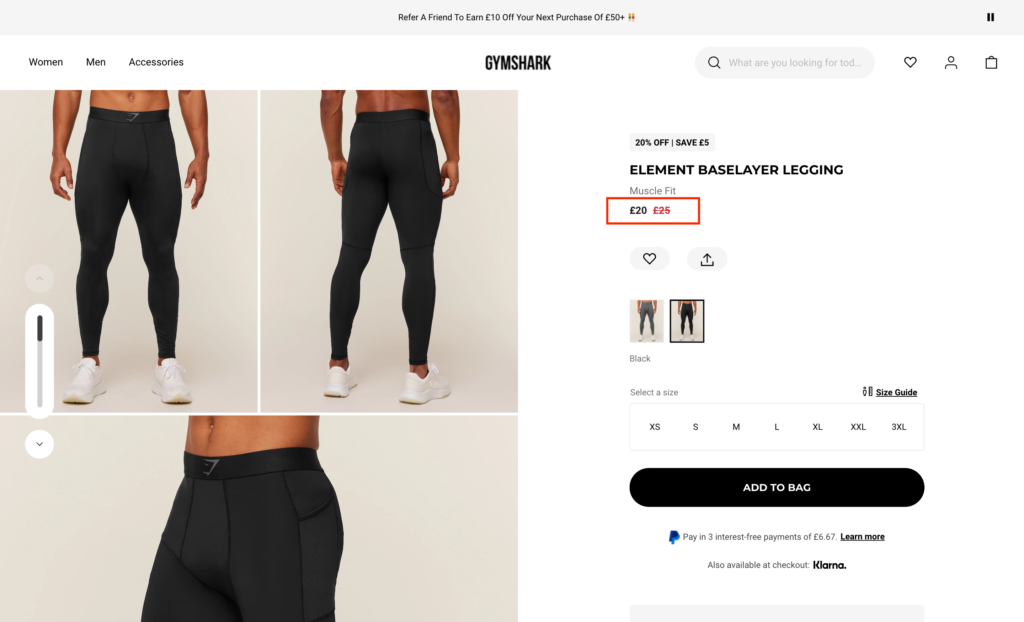
Gymshark uses anchor pricing by showing the original MRP first and the discounted price after it.
This shifts the user’s focus from “Is this expensive?” to “How much am I saving?”
A strong reference price increases perceived value and speeds up purchase decisions.
Always keep anchor prices real and transparent to maintain long-term trust.
Example:
- Original: $25
- Now: $20
The user now compares savings, not cost.
Always keep discounts honest.
Step 4: Offer Tiered Pricing Options
Give users choices instead of forcing one decision.
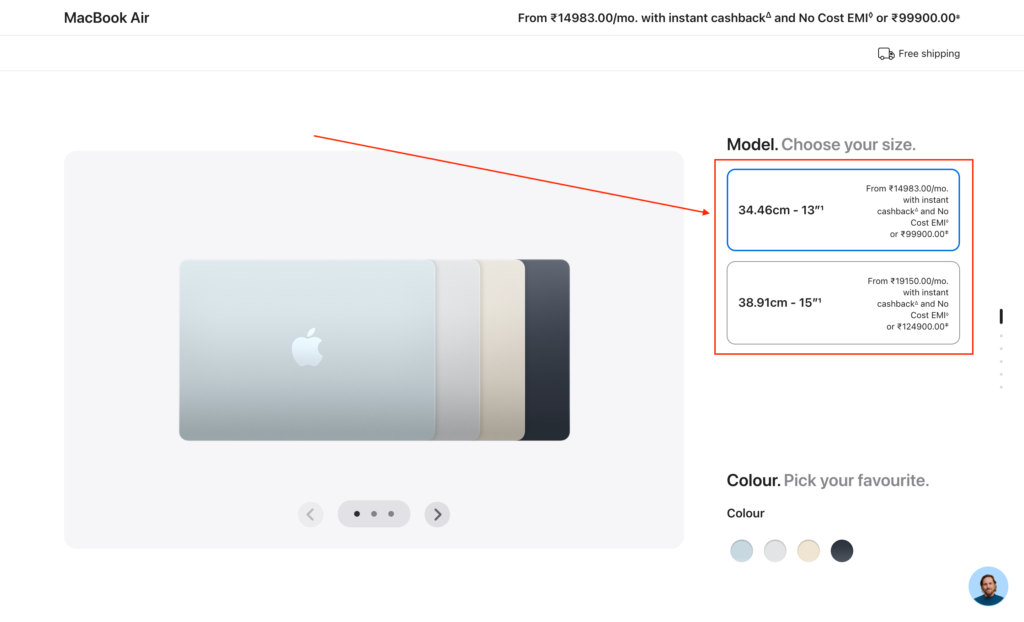
Apple offers multiple product options on the same page, allowing users to compare value instead of price alone.
Most buyers naturally select the middle configuration , as it feels balanced in performance and cost.
This approach reduces decision pressure while increasing average order value.
Tiered choices work best when differences are clear, genuine, and value-driven.
Example:
- Basic – ₹499
- Standard – ₹999 (Most Popular)
- Premium – ₹1,499
Users naturally choose the middle option, increasing conversion.
Step 5: Remove Shipping Price Shock
Unexpected shipping cost is a conversion killer.
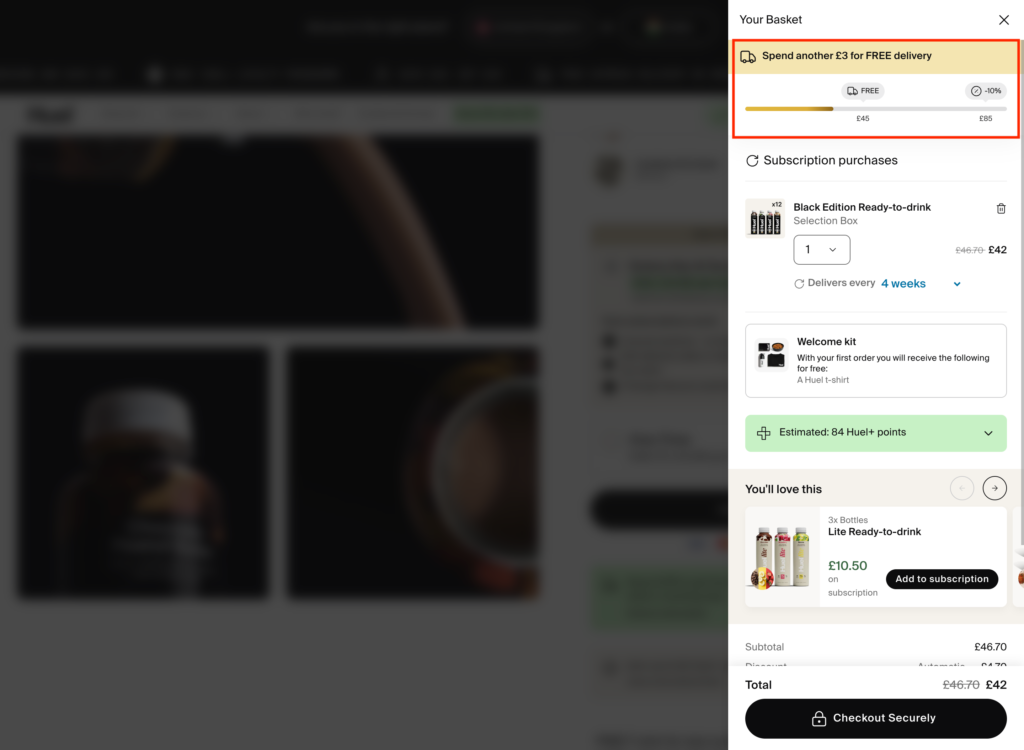
clearly communicates free shipping above a minimum order value , removing surprise costs before checkout.
This transparency builds instant trust and reduces cart abandonment.
A visible free-shipping threshold also encourages users to add more items to qualify.
The result is higher confidence, smoother checkout, and increased average order value.
A proven solution:
- Free shipping on orders above ₹999
This improves trust and increases average order value.
Step 6: Use Bundle Pricing for Higher Perceived Value
Combine related products.

This media shows how multiple related products are offered together as a bundle instead of being sold individually.
By pricing the bundle lower than the combined individual prices, users feel they are getting a
better deal and more value.
Bundle pricing shifts the decision from “Do I need this product?” to “This offer makes sense.”
It increases average order value while keeping pricing clear, fair, and trustworthy.
Example:
- Product A – ₹399
- Product B – ₹399
- Bundle – ₹699
Customers feel they save money, and your revenue increases.
Step 7: Be Fully Transparent With Pricing
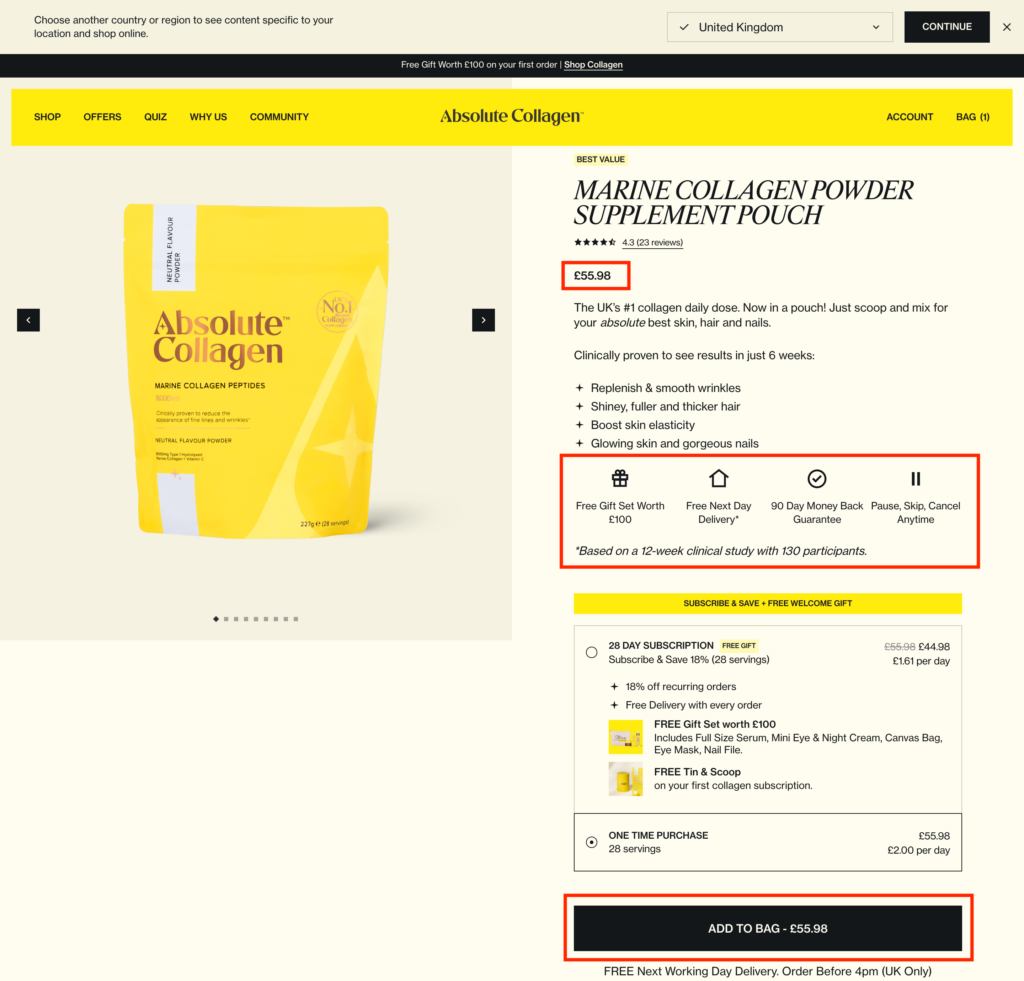
Absolute Collagen clearly communicates the final payable price directly on the product page.
Free shipping and delivery timelines are shown upfront, removing uncertainty before checkout.
A visible money-back guarantee and return policy reassures users and builds confidence.
This transparent pricing approach reduces friction, increases trust, and improves conversions.
Always show:
- Final payable price
- Taxes and shipping early
- Clear refund or return policies
Transparency reduces hesitation and builds trust.
Step 8: Test, Measure, Improve
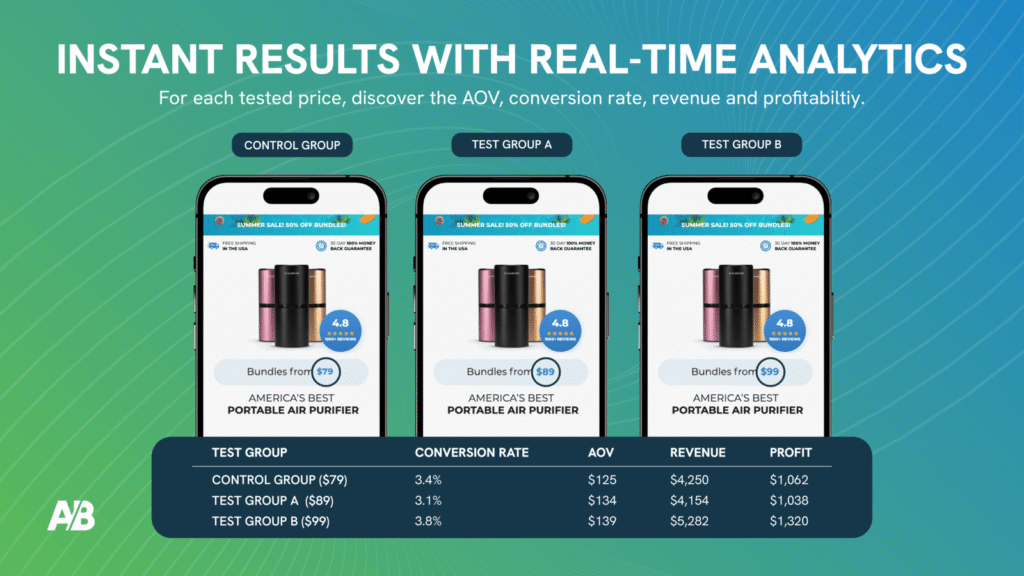
Pricing is never final. Pricing should be treated as an ongoing experiment, not a one-time decision. Regular A/B testing of price points, discounts, bundles, and free-shipping thresholds reveals what users respond to best.
Tracking impact on conversion rate, cart abandonment, and average order value ensures decisions are data-driven.
Even small pricing adjustments can unlock significant gains in revenue and profitability.
Regularly test:
- Price points
- Discount formats
- Bundle offers
- Free shipping thresholds
Track impact on:
- Conversion rate
- Cart abandonment
- Average order value
Small price changes often create big results.
Final Thoughts
Pricing is not about being cheap. It is about being clear, confident, and customer-focused.
When pricing feels right:
- Users trust faster
- Decisions happen quicker
- Conversions grow naturally
Smart pricing turns traffic into revenue.
Post Tags :
Share :


Get Started
Get Your Insurance Today!
Lorem ipsum dolor sit amet, consectetur adipiscing elit. Ut elit tellus, luctus nec ullamcorper mattis, pulvinar dapibus leo.